Volley & Bayonet: basing brigades

I’m trying to get my head round basing in Volley & Bayonet and would welcome any thoughts or advice.

I’m not looking to accurately depict each different type of brigade from each nationality. That way lies madness! I’m looking to make an semi-informed generalisation that could represent a brigade.

From reading around I’ve come up the following, based on both ideal / fudged (for easy arithmetic’s sake) values and possible numbers in the field.

NB I’m going with massed infantry / cavalry stands.

  • 800 men in a battalion, and 3 battalions in a brigade, making 2400.
  • 150 horse in a squadron and, 4 squadrons in a regiment, and 4 regiments in a brigade, making 2400.

Does that sound reasonable in a general sort of way?

In order to make it achievable, I’ve opted for a 1:200 figure man ratio, so that would make both infantry and cavalry brigades have 12 figures.

If infantry skirmishers represent about a battalion’s worth of men, they would therefore have 4 figures (2400/3/200) and cavalry skirmishers would have 3 figures (2400/4/200). Though if you considered that some infantry brigades have 4 strength points and a skirmisher stand has 1 strength point, then you could consider that it too has 3 figures (12/4). 3 skirmishers on a skirmish base might be more aesthetically pleasing (and less crammed) than 4.

NB I’m going to be using 6mm figures and hoping to base them on half-sized bases, and use half measurements as play space is at a premium.

OGL a gogo

So Wizards of the Coast have posted an update on their OGL plans.

While putting core mechanics in the Creative Commons may seem like a gift to the community, the reality is it’s probably stuff that they couldn’t restrict others from using anyway.

More significant is their continued plan to deauthorize 1.0a, so that all future publications will have to use OGL 1.2. Is that so bad? See for yourself.

https://www.dndbeyond.com/posts/1432-starting-the-ogl-playtest

Schrödinger’s OGL

Unless you’ve been living under a rock, you’ve probably heard that the current owners of the Dungeons & Dragons RPG, Wizards of the Coast, are busy tickling the dragon’s tail. It’s even hit mainstream media.

Firstly they indicated to shareholders that the brand is “under-monetized” whilst being one of the largest, if not the largest, source of revenue for their corporate overlords Hasbro.

Then came an announcement heralding a bespoke virtual table top for playing D&D in a “walled garden” which would facilitate the kinds of micro-transactions that have made certain videogames extremely lucrative.

A subsequent leak of a proposed draconian revision of the Open Gaming Licence – a licence which has allowed 3rd party publishers to produce D&D compatible work that includes open gaming content for over 20 years – claimed that:

“You agree to give Us a nonexclusive, perpetual, irrevocable, worldwide, sub-licensable, royalty-free license to use that content for any purpose.”

OGL 1.1 leak on Pastebin or in PDF on battlezoo.com

This, amongst many other restrictive and punitive additions to the Open Gaming Licence has made many in the RPG community anxious and annoyed. The question is, can Wizards of the Coast revoke OGL 1.0a, that has widely been perceived as irrevocable since its inception, and force creators to accept a worse deal? Ryan Dancey, one of the architect of the OGL, certainly seems to think not.

I’m no lawyer but here’s my thoughts on the OGL issue:

“Updating the License: Wizards or its designated Agents may publish updated versions of this License. You may use any authorized version of this License to copy, modify and distribute any Open Game Content originally distributed under any version of this License.”

OGL 1.0a at opengamingfoundation.org

OGL 1.0a was authorized (that is, not a draft). So even if the OGL is updated you can use previous versions of the OGL, including OGL 1.0a. Ok fine.

“VIII. TERMINATION. This agreement may be modified or terminated.
A. Modification: This agreement is, along with the OGL: Commercial, an update to the previously available OGL 1.0(a), which is no longer an authorized license agreement. We can modify or terminate this agreement for any reason whatsoever, provided We give thirty days’ notice.”

OGL 1.1 leak on Pastebin or in PDF on battlezoo.com

“Content already released under 1.0a will also remain unaffected.”

An Update on the Open Game License (OGL) on the D&D Beyond website

A license is either authorized or not. If content can exist under OGL 1.0a, then the sub-text is that OGL 1.0a is in fact authorized, despite their claims to the contrary. And given the amount of corporate doublespeak on display in the full D&D Beyond statement, you shouldn’t trust them to be 100% honest about this. They’re in it for the money. Oh and to eliminate the competition.
According to Wizard’s statement on the D&D Beyond website one of their core principles is:

“to ensure that the OGL is for the content creator, the homebrewer, the aspiring designer, our players, and the community—not major corporations to use for their own commercial and promotional purpose”

An Update on the Open Game License (OGL) on the D&D Beyond website

All except one major corporation of course.

They are trying to strong-arm people to change licenses, from an open, irrevocable one to a restrictive, revocable and onerous one. Why would anyone agree to have less rights? I wouldn’t.

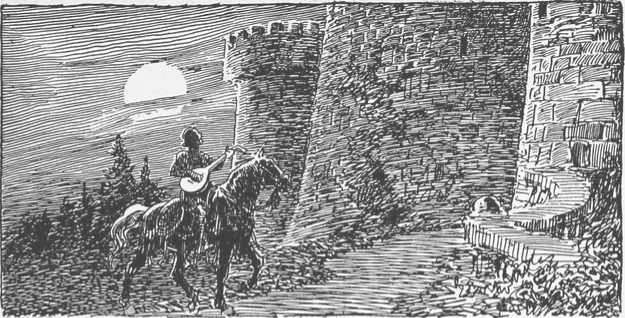
Who lives in a castle like this? (OD&D)

I was reading OSR Grimoire’s recent illuminating post, Cook/Marsh Expert: The Adventure, when I was reminded that there was a post about castles in OD&D languishing in my drafts folder. So without further ado . . .

In order to keep my brain ticking over, I thought I’d have a go at automating the castle occupant generation rules found in the original version of Dungeons & Dragons (OD&D). I’ve been finding it relatively easy to get the type of results that I’m after using Hex Describe, so I used it again for this project.

Castles are a bit of a big deal in OD&D and rightly so. They dominate the surrounding lands for 20 miles (4 hexs) in all directions and levy taxes on the villages within their barony. Adventuring parties that pass nearby will be intercepted by representatives of the castle in the following situations:

  • Travelling in same hex as castle: 3 in 6 chance
  • Travelling 1 hex away: 2 in 6 chance
  • Travelling 2 hexs away: 1 in 6 chance

If so, they could be challenged, taxed or even magically compelled to complete a quest or die! If the party tries to avoid the interception, they may be pursued (if hostile: 3 in 6 chance; if neutral: 1 in 6). It’s likely that adventuring parties will eventually feel the influence of castle occupants in one way or another. The owners fall in to six categories and they can be quite interesting characters. Here’s an example of each:

  1. This castle belongs to a Lord (level 9) guarded by 3 Giants. There are also 107 men aiding the castle’s defence. Half of these are light foot armed with crossbows, the rest are heavy foot. Also in residence: Magic-user (level 6). They seem neutral.
  2. This castle is the base of a Wizard (level 11) guarded by 4 Basilisks. There are also 95 men aiding the castle’s defence. At least half of these are light foot armed with crossbows, the others are heavy foot. Also in residence: Apprentice (level 7). They are hostile.
  3. The castle is owned by an Evil High Priest (level 8) guarded by 13 White Apes. They have an army of 102 men. At least half of these are light foot armed with crossbows, the rest are heavy foot. They are chaotic.
  4. This castle is inhabited by a Patriarch (level 8) guarded by 4 Superheroes (level 8). 111 men are under their control. Half of these are light foot armed with crossbows, the rest are heavy foot. Also in residence: 1 Assistant (level 4). They are lawful.
  5. The castle is home to a Necromancer (level 10) guarded by a Gargoyle. Defending the castle are 122 men. Half of these are light foot armed with crossbows, the others are heavy foot. The occupants seem hostile.
  6. The castle is occupied by a Superhero (level 8) guarded by a Hero (level 4) mounted on a Roc. Their forces include 108 men. Half of these are light foot armed with crossbows, the rest are heavy foot. The occupants seem hostile.

NB For those of you who might not be familiar with some of OD&D’s nomenclature, Patriarchs are level 8 Clerics, and the following are levels of Fighting-Men: Hero (4), Swashbuckler (5), Myrmidon (6), Champion (7), Superhero (8), Lord (9).

I hope you’d agree that such owners would have quite a bearing on the surrounding lands and therefore on any characters that journeyed within their realms.

It’s interesting to note that the castle occupancy rules in D&D B/X Expert Rules are a pale imitation of those in OD&D and only make a passing reference to the flavour that the earlier ruleset effused.

Note that the men listed [a patrol of 12 at most] are only part of the castle owner’s forces. The rest of the force should include men and might even include special creatures such as trolls, or combinations such as superheroes mounted on griffons.

D&D B/X Expert Rules (X59)

Believe it or not, the Rules Cyclopedia is actually slightly blander in this regard.

Note that the men listed [once more a patrol of 12 at most] are only part of the castle owner’s forces and are simply the unit sent out after annoying travelers; the rest of the castle’s forces should include other men and might even include special monsters.

D&D Rules Cyclopedia (p95)

However to its credit, the Rules Cyclopedia does at least feature demihumans as possible castle owners on the Castle Encounter table (p98). But it’s still found incredibly wanting on the topic of castle occupants.

In conclusion, I would recommend reading OD&D, even if you don’t intend to play it. You might be surprised what you find!

I would be remiss for not mentioning Wayne Rossi’s excellent The Original D&D Setting for drawing my attention towards OD&D‘s implicit procedural setting. Go read that too!

FYI Full Metal Plate Mail by Leonaru is a well-presented retroclone of OD&D. If you’re interested in retroclones of this era of D&D its definitely worth a look.

Portable Wargame: streamlining remote play

I’m a fan of Bob Cordery’s The Portable Wargame. It provides a way to play conclusive and dramatic battles without getting bogged down in byzantine rules. The game suits sparring tabletop generals and the solo hobbyist. However in my efforts to play it remotely (eg on VASSAL), there is one particular aspect that I’ve been mulling over.

When a unit is hit, the defending unit rolls to see whether they must either:

  • take the damage
  • choose between taking the damage or retreating

nb Higher quality troops are more likely to have the choice of holding or retreating.

I like this rule as it gives the non-active player an opportunity to make tactical decisions during the active player’s turn. However for games that are played remotely, this is a potential snagging point if the players are not present at the same time. In such asynchronous situations, the active player may have to wait on the non-active player communicating their wishes before the active player’s turn can be completed. This isn’t arduous but it does slow the flow of each turn that involves combat. Which in a wargame, can be numerous.

So here are some thoughts on possible guidelines (which could be adopted if both sides are in agreement) to help determine what a defending unit will do, when given a choice:

  • A defending unit will hold a strategic position if there’s a chance that reinforcements will arrive before all is lost.
  • A defending unit will retreat from a strategic position, if holding it would mean that the unit is lost.
  • If not in a strategic position, a defending unit will retreat towards a stronger position, or towards friendly lines (whichever is closer).
  • If there is any doubt as to which direction a retreating unit should move, it should be directly away from the attacking unit and not closer towards any other enemy unit.

You would of course have to agree before the battle, which locations were strategic positions. But hopefully this should be quite apparent whilst surveying the battlefield. Towns, bridges, hills, fieldworks and fortifications would be likely candidates. Woods overlooking open ground could be advantageous positions too depending on the map.

Hopefully these guidelines will be of use to anyone wanting to streamline their remote play, or indeed the solo gamer who sees merit in reducing the bias that they may have whilst playing “the enemy”.

Epées & Sorcellerie: Thieves and their correction

The Alea iactanda est blog has done a fantastic job of translating some of the new content from the 2nd edition of Epées & Sorcellerie from French into English. However I did notice a few inconsistencies in the text of the Thieves article (you can read it here) which led me to do a little digging. Part of the translation reads:

“In addition, when he is prowling about on his own, a Thief adds his attack bonus to the normal surprise chance (1-in-6). For example, a Level 4 Thief would have 2 chances out of 6 to surprise his opponents. Carrying a light source cancels this bonus.”

Attentive E&S players will no doubt recall that the surprise roll in the English 1st edition differs from the aforementioned one:

“If in doubt about the surprise, consider the probability of surprise in an unexpected meeting to be 2 chances in 6.”

So something’s amiss here. Not having the French 1st edition to hand, I consulted the relevant sections in the French 2nd edition:

“De plus, lorsqu’il rôde seul, un Voleur ajoute son bonus d’attaque à la chance normale de surprendre les monstres (1 sur 6). Par exemple, un Voleur de niveau 4 aurait 2 chances sur 6 de surprendre ses adversaires. Porter une source de lumière annule ce bonus.”

“En cas de doute sur la surprise, considérez que les probabilités d’être surpris lors d’une rencontre inattendue sont de 2 chances sur 6.”

One doesn’t need to be a cunning linguist to figure out that the inconsistency in the surprise roll is in the original French text. It is not through any fault of the translator.

But there is more dear reader!

The keen eyes amongst you will have noticed that the example given, is also flawed. A Thief doesn’t gain an Attack Bonus until level 5 according to the table in the French 2nd edition (see below).

Strictly speaking the conclusion of the example is correct – if the chance of surprise used is 2 in 6 as mentioned in the Surprise quote. A level 4 Thief has no Attack Bonus, so their chance of surprise is still 2 in 6. However the 1st sentence in the example says that the normal chance of surprise is 1 in 6, so this makes the whole example unhelpful.

So for this paragraph to be consistent with rest of the text it should really be:

“In addition, when he is prowling about on his own, a Thief adds his attack bonus to the normal chance to surprise monsters (2 in 6). For example, a Level 5 Thief would have 3 chances out of 6 to surprise his opponents. Carrying a light source cancels this bonus.”

But of course there’s always the possibility that the standard surprise roll should indeed be 1-in-6. But upon referencing OD&D (Book III p9), I’d say that my proposal is probably correct.

“If the possibility for surprise exists roll a six-sided die for each party concerned. A roll of 1 or 2 indicates the party is surprised.”

I rest my case, M’lud.

Epées & Sorcellerie: procedural character generation

It’s nice to have an open gaming table and welcome wandering greenhorns to the RPG hobby whenever possible. But I think it’s better to have a stack of pre-generated characters for a newcomer to choose from, than hold up the session while they roll up a character from scratch.

NB They can of course roll up their own character between sessions should they want to play again.

Anyhoo, with that in mind, I’ve been experimenting with procedural character generation for Epées & Sorcellerie of late. I’d seen folks use spreadsheets to automatically create randomly generated bits & bobs for RPGs, so thought I’d give making instant pre-gens a whirl.

Not being a spreadsheet wizard, it’s taken me a while to figure out how on earth to do it. I’ll spare you the technobabble for now – I’ll go in it in a future post. I really just wanted to share one of the first outputs. Poor Edward . . . he really is a hopeless character.

NameEdward
Race*Orc
Age**27
AlignmentChaos
ClassWarrior
Level1
HP3
Cultural Origin***Civilised
Languages / SkillsCommon
Read / WriteNo

* I prefer a humanocentric game but for the purposes of science I’ve included all types
** A houserule: 17 + level + 2d6
*** from E&S2 (English translation here)

So far so good. What could possibly go wrong?

ABILITY2d6 RollModifier
Strength4-1
Intelligence70
Wisdom80
Dexterity3-2
Constitution2-2
Charisma5-1
  • Shield (AC +1)
  • Flail
  • Javelin

He’s a brute in melee combat with his 4 Strength giving him -1 to hit *ahem*. Thankfully his Warrior’s Attack Bonus (+1) cancels this out. Phew!

As Edward has no armour, his base Armour Class is equal to his Dexterity. Unfortunately for Edward that’s 3 . . . so once you add in his shield, opponents only need to roll above a 4 on 2d6 to hit him. Oh dear. Though melee combat in E&S is based on opposed rolls – it’s only the highest roller that hits their opponent. So I guess Edward isn’t exactly nimble and if you can get past his average offences then he leaves himself open to a battering.

At least he can try and keep opponents at bay with his ranged javelin attack. Oh . . . That -2 Dexterity modifier isn’t going to do him any favours is it?

The nail in the coffin is his -2 Constitution modifier hampering every HD he acquires upon levelling. It helps hammer it home that he’s more than qualified to be cannon fodder.

I think he’s probably more of a danger to himself than anyone else. I can just picture him flailing himself in the face. Truly a force of chaos. And given that he’s 27 years old yet still level 1, I think it’s safe to say that he’s probably reached his peak. It could be that due to his size or savvy, he’s never mastered the art of defence, so he’s prone to getting duffed up which is reflected in his poor Constitution. As a result, he’s always the last to be chosen to ‘play for the local team’ and hasn’t gained any real experience. Or learned anything from those experiences that he has had.

I’ve grown rather attached to Edward you know. He’s too good to waste as a PC. I think he’s going in the NPC pile.

ps I realise Edward is a daft name, especially for an Orc. I just bunged a load of names in the generator to give it something to work with. For pre-gens I’d be tempted to leave the name blank so the new player can make it their own with minimal effort. But I’ll probably retool the generator as a hireling creator at some point, so it’s nice to have the function there.

Centaurs

Centaurs are pretty wild.

On the subject of centaurs, the original edition of Dungeons & Dragons says “Centaurs will be found in hidden glens. It is there that both their females and young are and where their treasure is hidden.”

OD&D also states “At worst these creatures are semi-intelligent“. B/X is pretty much in agreement and says they are “somewhat intelligent“. In both cases they seem closer to animal than man.

I realise that in a FRPG not everything has to follow the rules of nature or indeed make sense. But personally I just can’t get my head round the fact that they might reproduce, or indeed how. I’m more likely to have them be magical or divine creatures. Created as arboreal protectors by the Lord of the Forest or possibly chaotic liminal beings formed at the meeting of our world and the mystical.

Anyway… Centaurs. How do you do yours?